Training Agent Trainers in Pokemon

By Albert Ezem Osakwe, Aidan Khan, Sho Tanaka, Issa Mohamed

Our Project's Mission

Goal: Develop AI agents that can make optimal decisions in Pokemon battles

Approaches:

Why Pokemon?

Pokemon battles offer a fascinating environment for AI research due to their complexity:

Complex Decision Space

Partial Observability

Simultaneous Decision Making

Normal Fire Water Electric Grass Ice Fighting Poison Ground Flying Psychic Bug Rock Ghost Dragon Dark Steel Fairy

Key AI Concepts

Our Teams

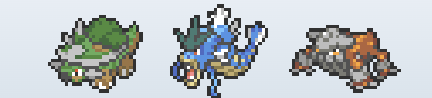
Tank Team

Torterra, Gyarados, and Heatran pixel art
  • Torterra
  • Gyarados
  • Heatran

Exceptional health, leveraging durability to win battles

Special Team
Alakazam, Scizor, and Jirachi pixel art
  • Alakazam
  • Scizor
  • Jirachi

Focus on diverse "special moves" that leverage type advantages

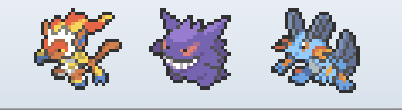
Speed Team

Infernape, Gengar, and Swampert pixel art
  • Infernape
  • Gengar
  • Swampert

Above average speed, frequent switching to leverage offensive strengths

Our Algorithms

Minimax Algorithm

A tree-based decision making strategy that recursively explores the game tree to find optimal moves:

Adapting Minimax to Pokemon

Challenges and Solutions:

Q-Learning Algorithm

A reinforcement learning approach that learns optimal action-value functions:

Adapting Q-Learning to Pokemon

Challenges and Solutions:

Results

Minimax Results

Our Minimax agent demonstrated strong decision-making capabilities, particularly in team-vs-team battles. The agent excelled at:

  • Leveraging type advantages
  • Making strategic switch decisions
  • Prioritizing moves based on effectiveness

The implementation successfully navigated the complex decision space of Pokemon battles, though computational constraints limited search depth.

Q-Learning Results

After 1000 training battles, our Q-Learning agent achieved:

  • High win rate against random opponents
  • Effective learning of type matchups
  • Strategic use of Terastallization mechanic

The Q-Table showed clear preferences for effective moves against specific opponents, demonstrating successful learning.

Algorithm Comparison

Minimax

  • Tree-based search algorithm
  • Affected by the non-deterministic nature of Pokemon
  • Computationally intensive
  • Can handle Pokemon's large state space with proper optimization

Q-Learning

  • Reinforcement learning based algorithm
  • Less affected by the non-deterministic nature of Pokemon
  • Requires substantial training
  • Needs modifications to handle larger state spaces

Future Work